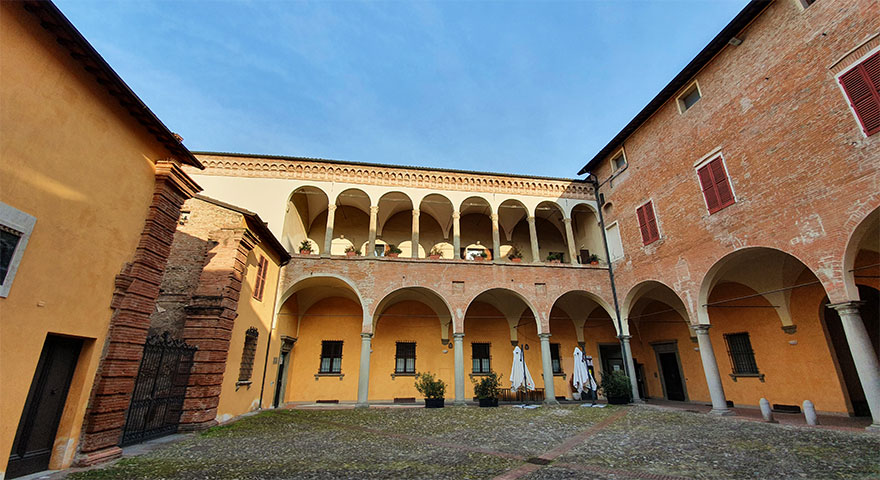
Machirelli then Dal Pozzo Palace

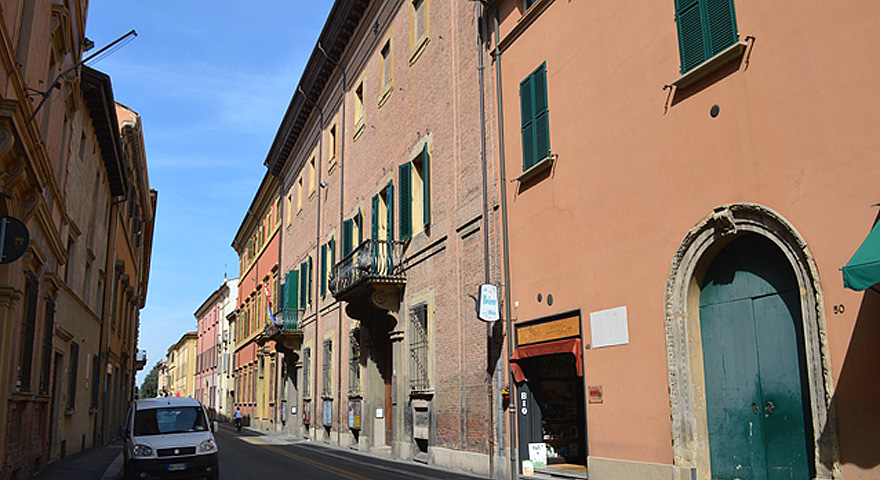
It was constructed at the end of the15th century for Michele Machirelli, chancellor of Girolamo Riario.

Only the picturesque courtyard, the portals with elaborated columns and large medallions of terracotta remain as symbols of that period. The inside was renovated in the 18th century and the decorations and frescoes leading to the first floor date back to this period.

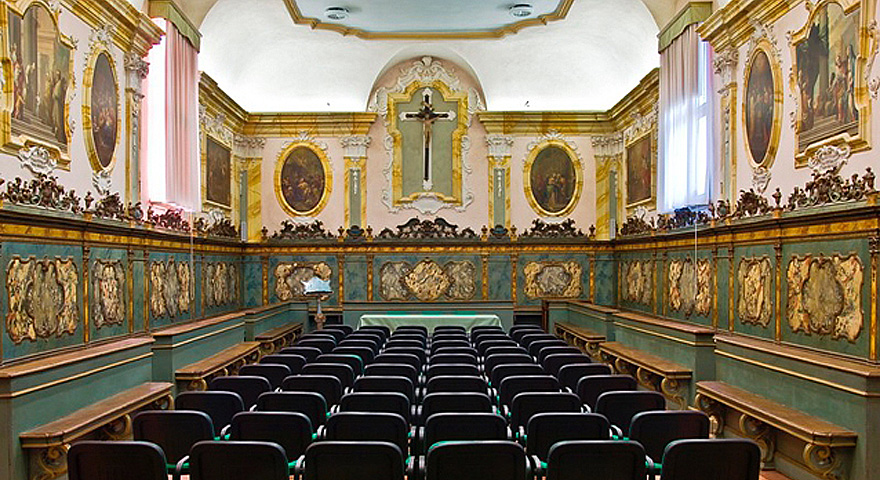
The Sala delle Stagioni, on the first floor, can be visited during the various conferences which are held there.


Machirelli then Dal Pozzo Palace
via Emilia 25


Miti Zagnoni then Raffi Palace

This building is the final result of the unification and later the renovations of three minor buildings of the 15th century, which ended at the end of the 18th century.

The composed name of this building comes from the various families who owned this property throughout the centuries. It was bought by the canonical Fabrizio Miti in 1648, then it was passed through hereditary rights to the Zagnoni family and finally it was bought by the Raffi family in 1794. On the ground floor there are still traceable elements of Renaissance architecture such as the small portal with the stone columns and doric capitals, and the numerous painted mythological scenes which can also be found on the first floor. The most important artistic parts date back to the 17th century, like the main stairway leading up to the noble floor, the monumental fireplaces decorated with chalk statues and the frescoes by Antonio and Giuseppe Rolli, which embellish the arches of the three rooms on the first floor. These splendid baroque mythological scenes celebrate the good fortune of the Miti family.

The palace is now owned by the CGIL, which you can turn for a visit.


Miti Zagnoni then Raffi Palace
via Emilia 44
tel. 0542.605611


Muggia Mansion

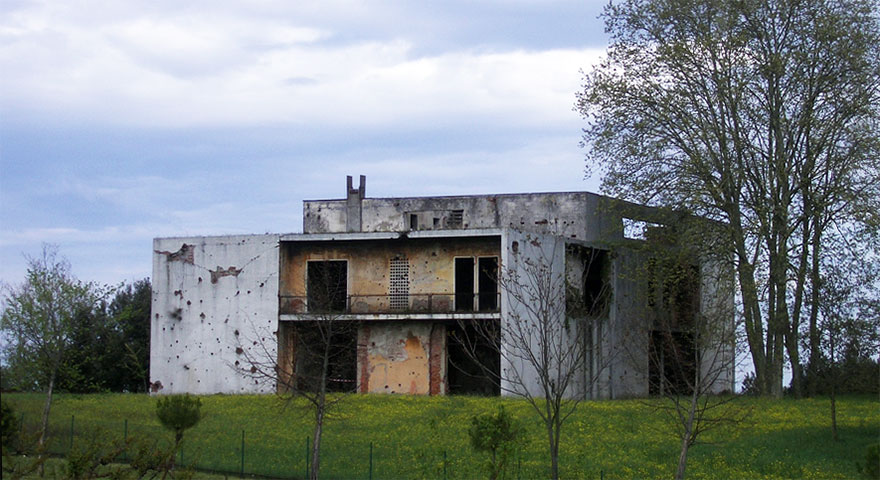
On the hills overlooking the new hospital lies a unique villa of the past, which unfortunately is now in ruins.

It was a 18th century hunting lodge, which still contained a beautiful frescoed hall and a large two ramped baroque staircase when the Muggia family bought it before the Second War World. They entrusted a young architect from Milan, Piero Bottoni, with the project of restoring it. The more valuable parts were conserved, but the architect substituted the totally deteriorated areas with daring and spectacular solutions in order to harmonise the old with the new. He cleverly created a refined and fascinating work of art making sure not to overlook the fine details of the furniture.

The abandonment and devastation of the war cancelled most of this masterpiece, nevertheless splendours of the past still remain, such as parts of the external structure and the large futuristic dining-room table made of one single block of marble and cement.

It is not possible to visit the villa inside.


Muggia Mansion
via Bel Poggio


Oratory of St. Rocco

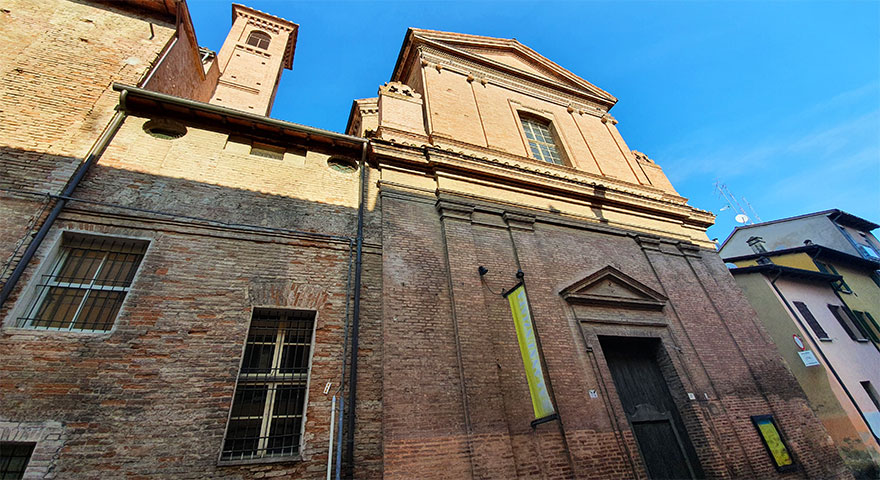
The oratory was dedicated to St. Rocco, protector against the plague of 1622. It was built by the rich confraternity of St. Rocco, whose members belonged to the upper families of Imola.

It is situated on the top floor of the Chiesa di Valverde (Church of Valverde), and its present aspect is due to the works commissioned to the architects Lorenzo and Cosimo Mattoni at the beginning of the 18th century. It is a large rectangolar room with a lowered arch, illuminated by vast windows and decorated in the rococò style, with numerous carved wooden benches, painted to resemble marble and arranged along the walls.

The rich furnishings of the past have now disappeared, but some paintings originally mounted in stucco frames are preserved in the Museo Diocesano.


Oratory of St. Rocco
via Valeriani 19
tel. 0542.25000 (extension 7)
e-mail: [email protected]


Opening hours:
Saturday 10.00am to 1.00pm & 3.00pm to 7.00pm


Admission by donation


Osservanza Complex

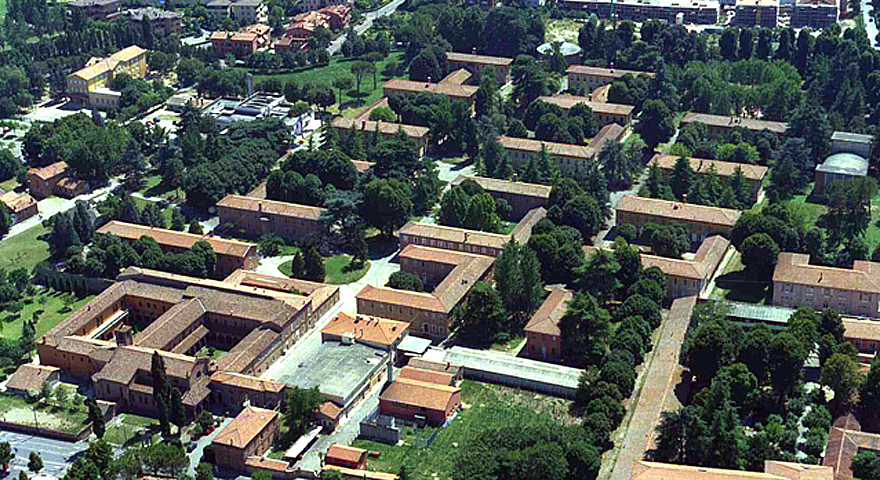
This huge complex hosted the county psichiatric hospital for almost a century since 1890: it was made up of single blocks housing the wards, the general services, the surgeries but it also comprised a huge park, intersected by wide tree-lined avenues and a wide agricultural area.
It grew to become one of the most important psichiatric hospitals in Italy, covering an area of 140.000 sqm. Nowadays is part of the Council’s patrimony and is part of a key project to make it available to the whole community.


Osservanza Complex
via Venturini


Pharmacy of the Hospital

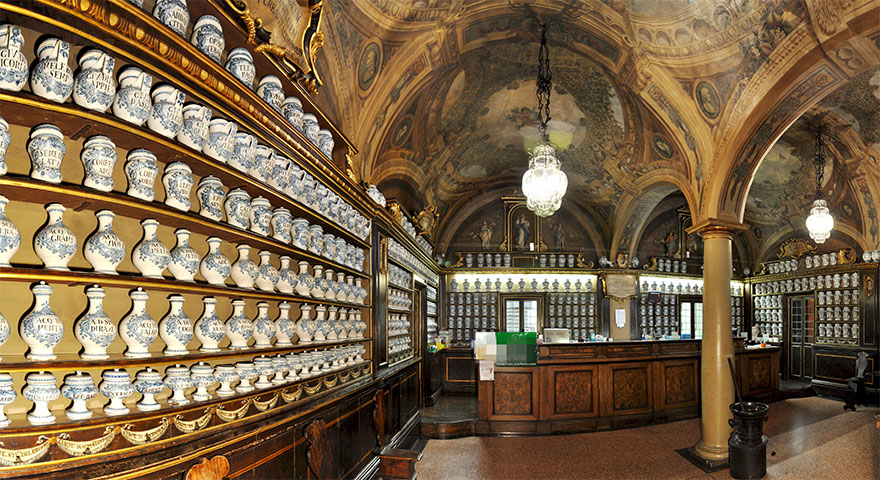
This building, inaugurated in 1794, has fortunately remained intact in both the furnishings and the decorations thereby giving the visitor a vivid image of a pharmacy as it was in the 18th century. The facade was the only part redesigned in 1928. Still conserved are the original 457 magnificent majolica vases manufactured in Imola , that carry the name of the medicament contained inside. These adorn the wooden carved shelves created by the wood-worker Giuseppe Magistretti, from Imola.

The painted ceiling is the work of the local artists Angelo Gottarelli and Alessandro Della Nave, who decorated a large number of the noble buildings of the town during the second half of the 18th century. These frescoes depict the virtues of medicine and the regenerating forces of nature. Contained inside the pharmacy are also six terracotta statues, of Faenza manufacture, painted with watercolours.

The pharmacy is still functioning and is open to the public during the opening hours.


Pharmacy of the Hospital
via Emilia 95

The site offers full access to the disabled


Pighini Palace

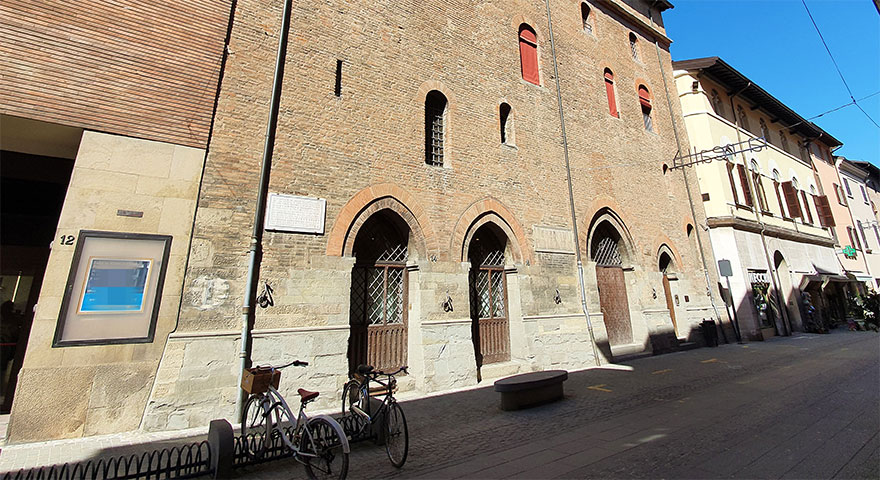
This building has retained its original aspect through the centuries. It is the only example of medieval patrician home remaining in Imola.

Built in the second half of the 13th century it was inhabited by many important noble families and it was also seat of the podestà before 1388. The facade is very austere looking and has four gothic portals which all differ in size.

It is private property and cannot be visited inside.


Pighini Palace
via Appia 18


Porticoes

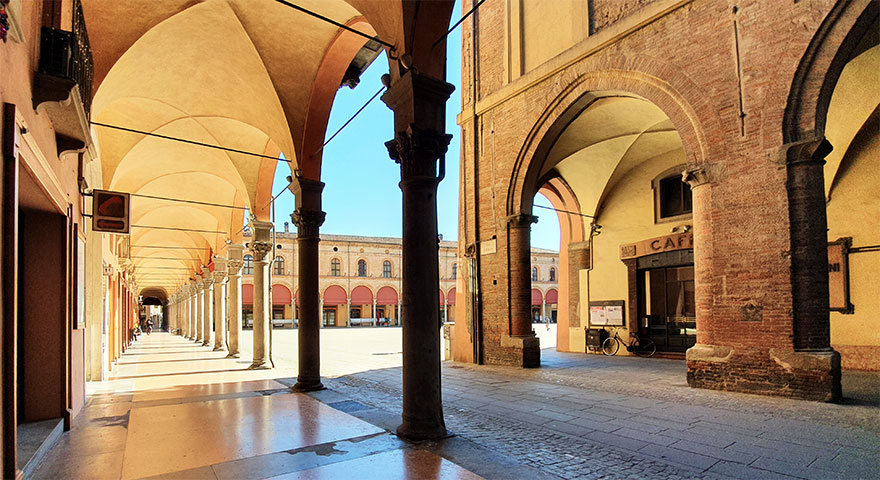
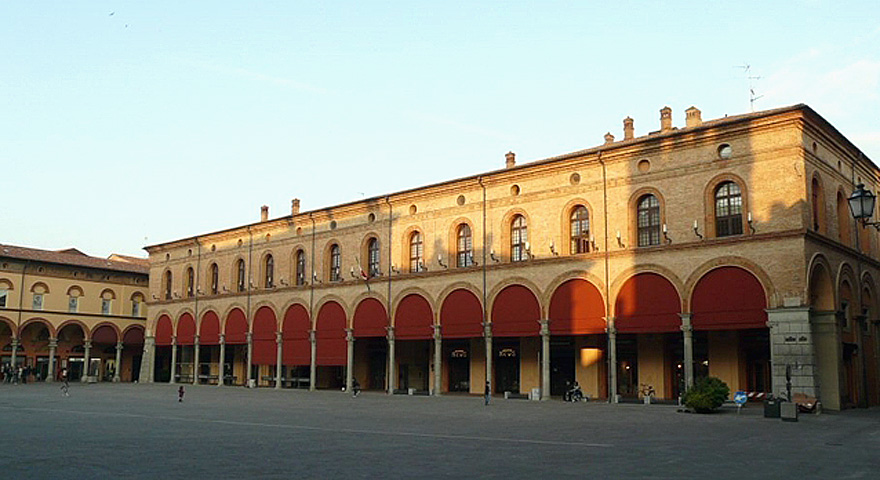
These open galleries which ornate the north and east sides of the main square, are a typical element which distinguish the towns of this region, and marks the traditional shopping and promenade area of the historical town centre.

The columns and capitals are in decorated sandstone, and the arches are in finely decorated terracotta.


Porticoes
piazza Matteotti


Rambaldi House

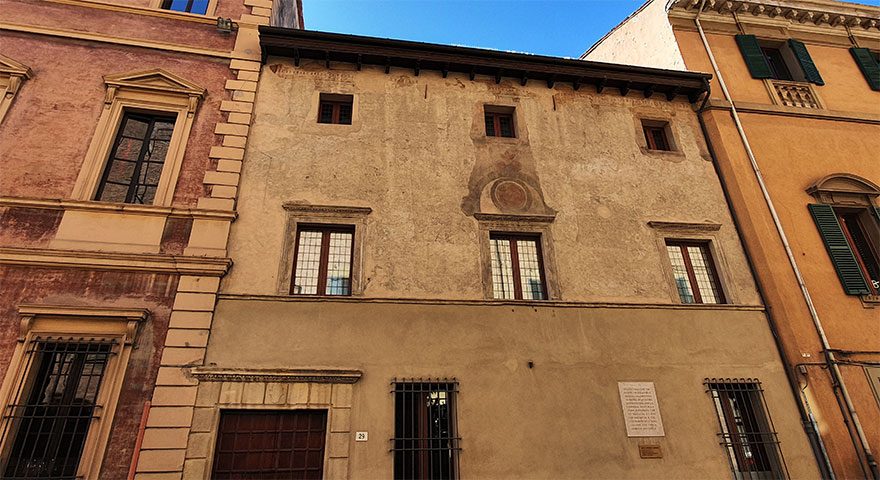
It was built in the 14th century, and was renovated in the 15th century as the facade, portal and the windows of the noble floor show, while the decorations which still can be seen from the outside at the top of the facade could be part of the original structure. This house belonged to the family of Benvenuto Rambaldi, the famous annotator of Dante.

It is a private property and cannot be visited inside.


Rambaldi House
via Emilia 29


Riario then Sersanti Palace

Girolamo Riario, nephew of Pope Sisto IV and master of Imola commissioned in 1480 Giorgio Fiorentino to construct his residence. The elegant facade in terracotta has 14 arches with sandstone columns ornamented with beautiful capitals. The windows of the noble floor, the arches and the eaves are all in elegantly decorated terracotta. A footbridge probably connected this building to a garden, which had its entrance in via Aldrovandi n. 29. An attractive arch in terracotta still remains as evidence of this.

At the end of Riaro’s reign the ground floor of the building was converted into shops for the silk dealers who used to store the silkworms in the upper rooms. Today the palace is the seat of the Margotti Art Collection.

It is private property but can be visited upon appointment. For further information please contact IAT at 0542.602207.


Riario then Sersanti Palace
piazza Matteotti 8


Salannunziata

This exposition room, called Sala dell’Annunziata, was once an antique church consecrated in 1635, but the original building was erected in 1587, the same period as the adjoining Convent of the Cappuccine.

The building has undergone many transformations during the centuries, but the outside still preserves its classic 17th century style. The inside, which was renovated around the middle of the 18th century by Domenico Morelli, is now completely empty and it si used for temporary exhibitions.


Salannunziata
via F.lli Bandiera 17/A


Sassatelli then Monsignani Palace

The Alidosi family was the first owner of the Renaissance mansion, which was later bought by the powerful Sassatelli family.

In 1522 the works of enlargement ended and the palace acquired that long, impressive facade that can be seen almost looming over the via Emilia. The service entrance for the stables is the one which today opens into Piazza del Duomo while the main entrance on the via Emilia leads to a courtyard with portals sustained by fine sandstone columns decorated with capitals which bear the coat-of-arms of Giovanni Sassatelli, head of the “guelfa” group of the town. This building was not just the seat of the Sassatelli court, but was also the base where the private troops of mercenaries used to leave for their battles against the opposing “Vaini” group.

It was probably in one of the halls of the noble floor that in 1501, during a feast given by Cesare Borgia, Guidarello Guidarelli was betrayed and killed. A famous monument dedicated to him can be found in Ravenna next to the Accademia di Belle Arti.

Today the building hosts offices, private homes and the concert hall Mariele Ventre.


Sassatelli then Monsignani Palace
via Emilia 69


The Ancient Walls

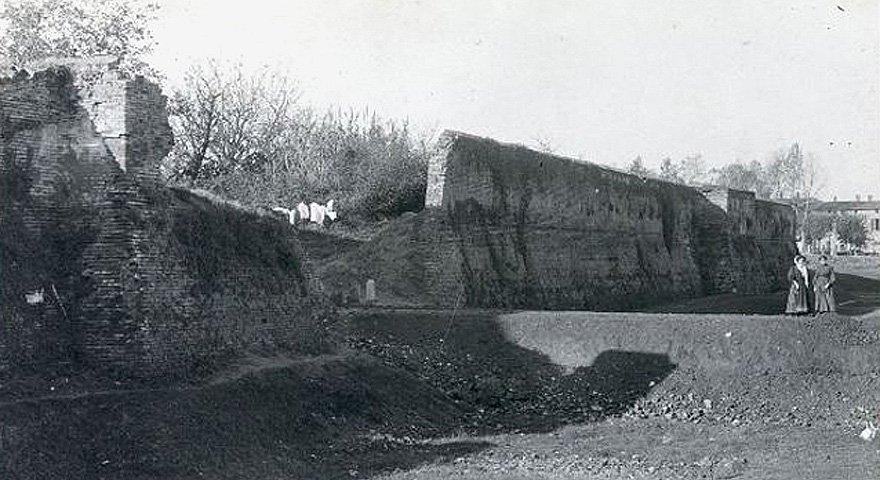
Built by Taddeo Manfredi – Lord of Imola before the Sforza family- in the 15th century, very few relics remain of the ancient fortification wall that surrounded the town.

It was Manfredi himself who ordered the construction of the four gates of access to the town. Today only Porta Montanara remains standing. The walls were destroyed at the end of the 19th century for the new urban developments.


The Ancient Walls
via Caterina Sforza


The Matteotti Square

The aspect of the square as it is today, is due to the urban projects promoted by Girolamo Riario, who became lord of the town in 1474.

The square was reconstructed and better shaped, and was devoted to the town market area. Together with Caduti della Libertà square and Gramsci square, which surround it, the Matteotti square has since made up the commercial centre of the town.

Girolamo Riario built the Signoria Palace (today known as Sersanti Palace) on the east side of the square, and it is regarded as one of the most beautiful buildings of the Renaissance in the region. The west side of the square is completely occupied by the elegant facade of the Town Hall.


The Matteotti Square
piazza Matteotti


The Montanara Gate

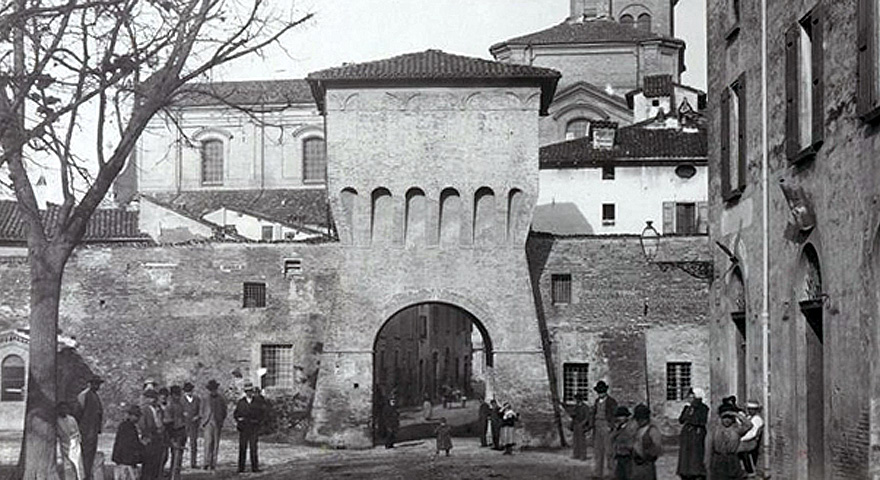
This was one of the four gates to the town, when brick walls used to surround Imola. These walls were ordered during the Manfredi reign.
This gate was commonly nick-named “Pusterla” (which means secondary entrance) since it was a gate of minor importance compared to the others that were either facing Bologna or Faenza. It was later called Montanara Gate (which means mountains) since it faces the hills and the far mountainous area.

The demolition of the 20th century deprived it of its defensive system, but the tower still remains fairly intact.


The Montanara Gate
via Nino Bixio